Sewer Connection Permits and Inspections Before Backfill
Before the contractor covers a new sewer connection, find out which office inspects the pipe, who books the appointment and what must stay visible. For work in Portland’s public right-of-way or a public sewer easement, the contractor requests the city’s right-of-way inspection before backfilling. Seattle uses a side sewer permit for the sewer work and requires an additional transportation permit when the job uses the public right-of-way. The permit list changes with the address and the location of the work. Start with the sketch and the scope, then confirm the sequence with the office that will inspect it. Portland Environmental Services, ENB-4.17 §9 · Seattle Public Utilities, Side Sewer Permits
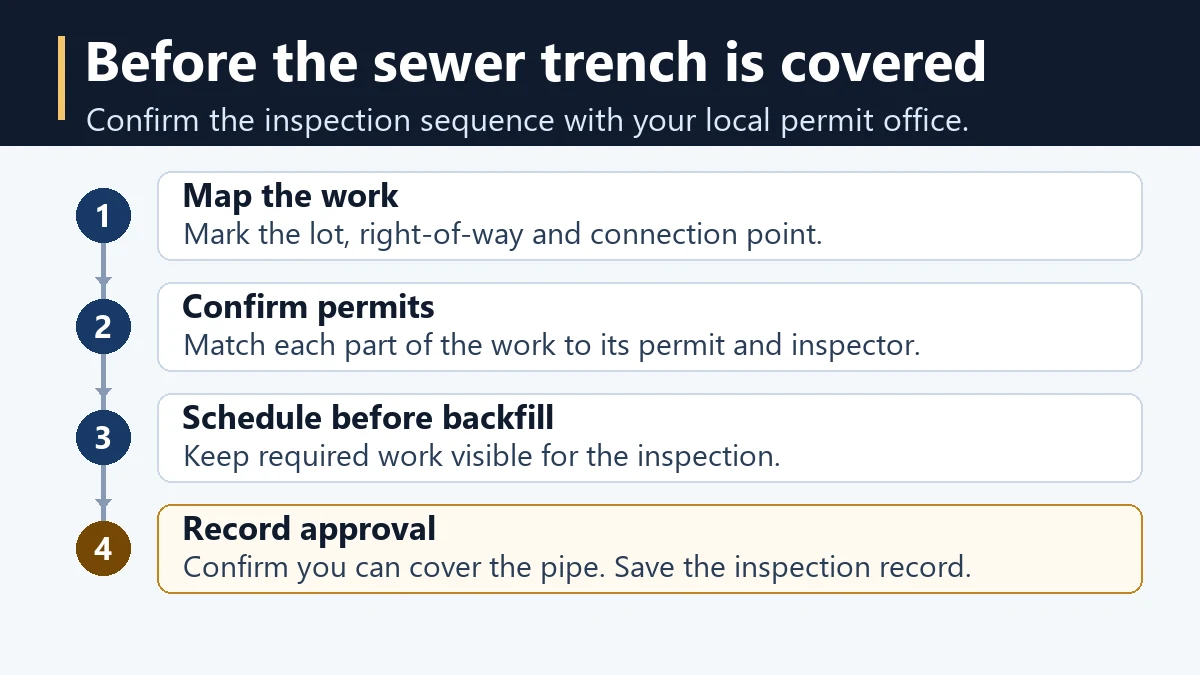
This checklist follows a new residential connection from the property to the public sewer. For the tap, capacity and construction charges that go with that work, see the city sewer connection cost guide.
Define which parts of the lateral the job will touch
A sewer lateral carries wastewater from a building to the public main. The property line, curb and main mark different points along that route. A contractor might replace pipe on the lot, connect to a public stub, or excavate into the street to reach the main. Mark the expected route from the building to the connection point and ask the sewer utility which parts of that route appear in its records. An existing pipe or stub still needs to be confirmed as an approved connection for the proposed project.
Give the permitting office the address or parcel number, the project type and the plan for the existing connection. Ask whether the proposed route crosses the property line, a public right-of-way, or an easement. Ask who maintains the segment where the work will happen. That answer helps you identify who can authorize the work and who will inspect it. Our city-by-city lateral responsibility guide explains why those boundaries vary.
Match each part of the project to a permit and an inspector
Use this table to prepare questions for your utility and contractor. The office may use different permit names or combine several parts of the work.
| Work or charge | What to confirm before work begins |
|---|---|
| Pipe on private property | Which plumbing or sewer permit covers the work, who can apply, and which office inspects this section. |
| Connection to the public system | The approved point of connection, who is allowed to do the work, and whether the public connection has its own inspection. |
| Street, sidewalk or public easement | Whether excavation, equipment staging, traffic control or pavement restoration needs separate approval. |
| Capacity and connection charges | Which public fees must be paid at application or issuance, and which amounts are already in the contractor’s quote. |
Record the permit issuer, permit number, responsible applicant and inspection contact for each separate approval. Ask your contractor to itemize the sewer permit and inspection work in the quote. City charges, the private lateral, and restoration can land in different parts of the budget. See what to look for in a sewer lateral installation quote.
What to put in the permit inquiry
Send one short description of the job to the utility or permitting office. Include the property address, the proposed building, any existing lateral shown on the utility’s records and whether the route crosses a sidewalk, roadway or easement. Ask the office to identify permits for each segment, who may apply, which inspections have to happen before cover and who signs off on the connection. Share the reply with each contractor bidding on the job so their quotes use the same scope.
Schedule the inspection before the crew needs to cover the pipe
- Get the issued documents. Check the address, the connection point and the approved scope. Have the permit number and approved drawings available when the contractor requests the inspection.
- Ask what the inspector must see. Get the local requirements for pipe placement, bedding, exposed joints, tests and the accepted connection fitting from the permit office. Ask which part of the line must remain visible if there are separate inspections.
- Put one person in charge of scheduling. Have the contractor or authorized applicant confirm the appointment, site access and any test the inspector expects. Book the inspection with enough room in the job sequence to keep the required work visible until the inspector has reviewed it.
- Confirm what permits cover. If the route or the connection point changes once the crew exposes the site, have the contractor check whether the issued drawings and permit need to change.
- Get authorization for the next step. Record the inspection result and confirm that covering the pipe is approved. If the inspector identifies corrections, get them documented and ask when the corrected work needs to be seen again.
If the trench is already covered, have the contractor contact the inspector and explain which segment was covered and when. Ask what evidence is acceptable and whether reopening any part is needed. Treat photographs as useful records and get the inspector’s confirmation before relying on them in place of an on-site inspection.
Portland, Oregon example
For a job that builds a new connection and crosses the property line, Portland’s permitting guide treats private-property plumbing and sewer work in the public right-of-way as distinct scopes. Portland Permitting & Development handles the plumbing permit for work on the lot. The Bureau of Environmental Services issues Utility Connection permits for covered new connection work and Utility Repair permits for covered lateral repairs in the right-of-way or a public sewer easement. Use the city’s guide to match the project to the correct application. Portland’s UR and UC permit guide
After the UR or UC permit is issued, the sewer contractor requests an inspection from Portland Bureau of Transportation Right-of-Way Utility and Construction Inspection. Section 9 of ENB-4.17 requires that the authorized pipe work be seen before backfilling. The rule also lists jobs that call for a pre-construction meeting, including certain maintenance-hole and drilled connections. A house on a lot with an existing stub should have its actual scope approved before budgeting a new main connection. Portland administrative rule, §§5–9 · Portland tap fees
Seattle, Washington example
Seattle Public Utilities uses a side sewer permit for the side sewer work, including the private-property and right-of-way parts within its scope. The Seattle Department of Transportation also requires a separate permit for right-of-way work such as excavation or equipment staging. Ask the contractor to confirm the applicable Seattle Public Utilities and transportation approvals before scheduling the crew. Use the inspection instructions from Seattle Public Utilities to check what the inspector expects to see, including pipe bedding where required. Seattle Public Utilities permit and inspection guidance
For example, a new house whose side sewer passes under the sidewalk should identify that right-of-way work in the permit discussion, confirm the inspection appointment before covering and ask whether an as-built plan is required. Seattle also tells customers arranging a conventional side sewer repair to have the contractor schedule a city inspection before covering the pipe. Seattle Public Utilities repair inspection sequence · Seattle connection charges
Keep a closeout record
Ask the contractor for the issued permit numbers, approved and revised plans, inspection results, the recorded point of connection and any as-built sketch the local office requires. Check whether the city or utility still needs a final inspection or permit closure. Save separate payments for the permit, any capacity fee and any street restoration. For the overall project budget, take those items and the agreed private work to the utility connection cost calculator.